
Climateline helps throughput on Niche Modular’s education builds
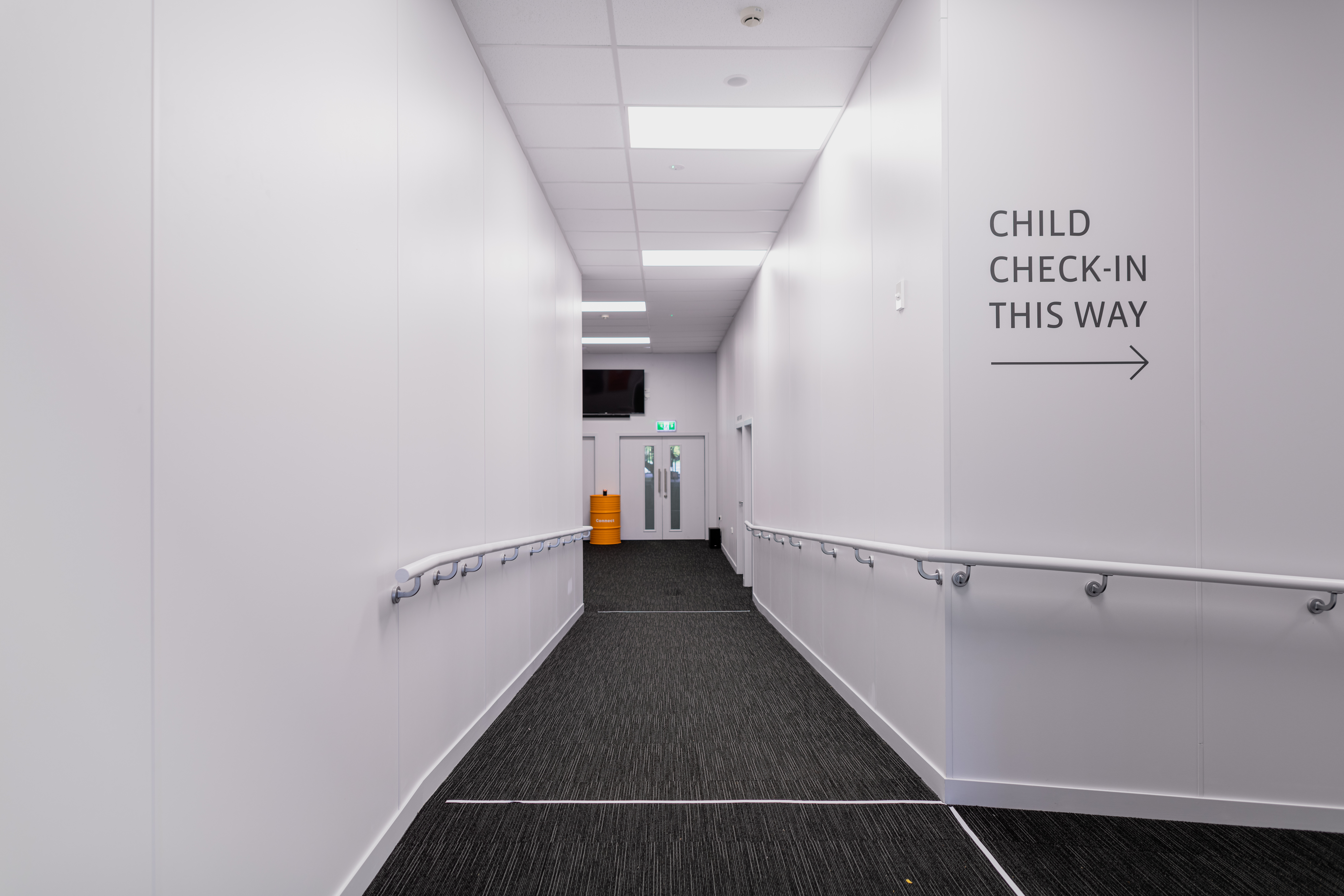
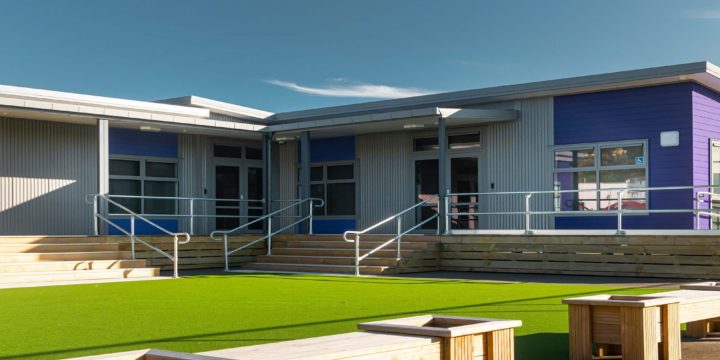
Niche Modular’s delivery of the Mahinawa Specialist School’s newest Satellite Unit at Porirua College, New Zealand, demonstrates how volumetric construction, when matched with aligned materials and systems, can meet complex educational needs with speed, quality and control.
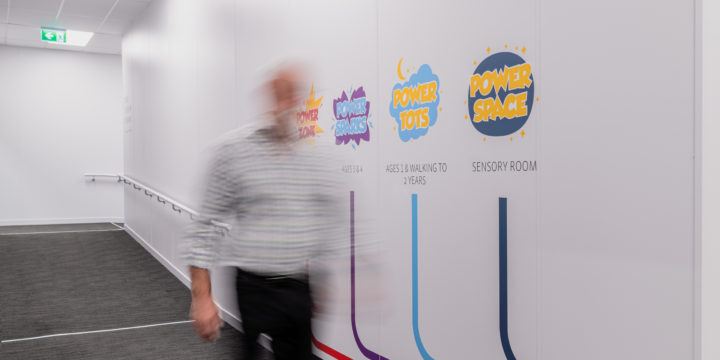
Mahinawa caters to students aged 5 to 21 with intellectual, physical, emotional and behavioural challenges. With high staff-to-student ratios and integrated therapeutic and educational support, the school required precise, high-performance interior finishes suitable for a sensitive environment.
For Petone-based Niche Modular, the project aligned well with its modular approach. The company—now New Zealand’s largest modular builder—focuses on delivering 95 per cent of each building offsite. This factory-first strategy enables greater consistency in finishes, quality assurance and speed to site.

“If we can build it in the factory, we will, whether it’s a deck, a stair, or something custom,” said Rick Bell, Business Development Director at Niche Modular. “The goal is always to reduce what needs to be done onsite and improve overall efficiency.”
For Mahinawa, Niche used ClimateLine prefinished plasterboard from Climate Surfaces for all internal wall linings. Designed for prefabricated construction, ClimateLine’s coated GIB substrate removes the need for plastering or painting, reducing both labour and drying time.
“For us, it was the efficiency of being pre-finished while maintaining acoustic value,” said Bell. “It’s glued, not nailed—simple, clean, and it removes trades from the equation.”

Bell estimates that using ClimateLine has led to a significant reduction in internal wall costs compared to traditional methods. “We’re saving around 30 per cent by eliminating fixing, stopping and painting,” he said. “There’s less waste too—everything is cut precisely, and we only trim for skirting.”
That level of simplification matters in modular construction, where the sequencing of factory-based trades must be tightly managed. For Niche, ClimateLine’s prefinished nature contributes to consistent throughput in its Lower Hutt facility, which spans more than 3,500 square metres.
“You don’t want painters and stoppers coming into your factory when your core objective is flow-line production,” Bell said. “It’s quicker, cleaner and reduces rework.”
Mahinawa School’s modules were fully lined, with joinery and services installed prior to transportation. Because the boards are factory-finished, they eliminated the risk of paint cracking or surface delamination during handling and installation.
“Because we’re transporting fully lined modules, we needed a wall finish that would hold up across multiple movements and installations,” Bell said. “We’ve tested other systems, but ClimateLine consistently holds up. No delamination, no cracking, just install and move on.”
The relationship between Niche and Climate Surfaces dates back over seven years, originating from an earlier phase of modular development that preceded Niche Modular’s current structure. That foundation laid the groundwork for ongoing collaboration and has seen ClimateLine become a core part of Niche’s internal fit-out strategy.
“We see ClimateLine as a product that aligns with the offsite methodology,” Bell said. “It’s all about simplification and precision.”
To manage compliance, quality and construction tracking, Niche uses a cloud-based documentation platform that supports both factory and site operations. The system enables digital sign-offs and photographic inspection workflows in place of on-site checks.
“Our local council doesn’t even come to the factory because it’s all documented digitally,” Bell said. “All inspection phases are photographed, logged, and submitted as part of a structured approval process.”
That integrated workflow helps Niche maintain pace and control across multiple projects. The company recently completed Wellington Hills College in just 100 days—a 16-classroom build on a greenfield site.
“It’s unheard of, but it only worked because of the experience we’ve gained beyond traditional construction methods,” Bell said. “It’s things like site works, landing, and the people we have within the company—how efficient they are at design, construction, and the factory.”
While Mahinawa’s scale was modest, its delivery was no less complex. The requirement for hygienic surfaces, reduced trades and minimised site disruption made ClimateLine a natural fit.
With a Group 1-S fire rating and impact resistance suited to institutional settings, the product is designed for health, education and high-traffic environments. For modular builders like Niche, its benefits are magnified by the efficiencies of offsite fabrication.
The Mahinawa School project reaffirms how matching building methodology to material specification delivers both programme and performance benefits. For Niche Modular, it’s an approach grounded in practice.
“We’re not just building boxes,” Bell said. “We’re building systems that work.”
Partner content
Prefinished linings from ClimateLine support Niche Modular’s education builds

Pre-finished Plasterboard: 60% Faster Than Painting Walls
 Plasterboard is the primary material of choice in New Zealand for the interior surface of walls and ceilings. Plasterboard is economic, easy to install, fire-resistant, non-toxic, long-lasting, repairable and usually manufactured locally. A limiting attribute, however, is that the finishing methodology is very laborious and slow; it requires significant downtime while waiting for the plaster and paint to dry. Clients expect monolithic walls where plasterboard is concerned, and while improvements on method and materials have been made to speed up the finishing process, it remains an inefficient process no matter the increments of advance.
Some solutions include an experimental initiative in Japan using a robot to install the product. Another is to eliminate joins entirely by using very large boards installed at a factory or site, be it gypsum or wood-based materials. Another solution somewhere in-between these and somewhat more practical is to eliminate the plaster and paint process. This would mean that a room which takes 40 hours to plaster and paint including the drying times, would only take 24 hours. In the prefab context, this idea plays an even more important role by increasing production output significantly by eliminating application and drying times of plaster and paint. Production output and reduced lead times equate to significant savings that could be passed onto the client.
In order to address the preference for a monolithic finish while unlocking the productivity potential for a pre-finished panelised plasterboard system, Climate has developed a longer and wider sheet that is up to 4.8m long x 1.35m wide, to enable a horizontal fixing format suitable for most wall sections. This is complemented by a slim profile aluminium extrusion finished with the same powder coating as the powder coat board surface for a perfect match. The resulting look is a contemporary and clean appearance with a single horizontal line. This simple yet profound change enables the industry to unlock the significant economic value of such a method while delivering a finish the client will value.
Pre-finished Plasterboard Saves Time in Warehouse Conversion Project
The construction of the new ELIM Christian Centre in Pukekohe has seen an old factory converted into a modern church with a main auditorium for 350 people along with breakout rooms for various activities. To modernise the interior and make it fit for purpose, the ELIM team chose to line existing and new partition walls with ClimateLine pre-finished plasterboard panels with matching aluminium joiners.
“We wanted to achieve a very modern, sharp look,” explains Project Manager, Bill Kathagen, ELIM. “We could have used paint, but we’d heard about Climate’s pre-finished product and thought it’d be very good for our project. The main benefit for us was that the surfaces are pre-painted and pre-coloured.”
For the walls of the 350-person auditorium, 10mm ClimateLine powder coated in Black matt finish with the new Slimline jointer was selected. “We went with the black so that we could easily control the artificial lighting in the auditorium,” explains Bill. With the high walls of the auditorium, installing pre-finished plasterboard simplified the construction process. “The walls are massive — 6m high and 20m long,” says Bill. “If it had just been finished with ordinary plastered joints and painted, it would have been a very big job. It would have been extremely difficult to get it as clean and tidy as this product.”
In the break-out areas, the ELIM team opted for ClimateLine powder coated in Resene Half Iron, a light off-white which helps create a sense of space in those rooms. “The walls in these spaces are still very high at 4m, so the lighter coloured walls create a nice, light airy feel,” says Bill.
Installation of the wall linings was completed by FBS. While the large panels made for a big installation job, the process was quick and simple with linings attached to lightweight steel framing. For Phill Ford, Builder, FBS, the use of Climate’s products helped simplify the job. “There’s no plastering, no sanding, no dust, no painting, no fumes,” he says. “I haven’t seen anything like that here in NZ before.” With the ELIM centre located next to a food preparation facility, the minimisation of dust was a huge benefit.
Phill adds that should any damage occur, repairs will be simple and cost-effective. “If you get a hole you don’t need a builder, a plasterer and a painter, you just take the sheet off and replace it, so that’s a real advantage.”
With the time-saving benefits and high-quality finish of the ClimateLine plasterboard system, both client and builder are very pleased with the final result — sleek, low-maintenance walls for the church interior. “It’s exceeded our expectations,” says Bill, “It looks fantastic and has saved us time and money in terms of plastering and painting.”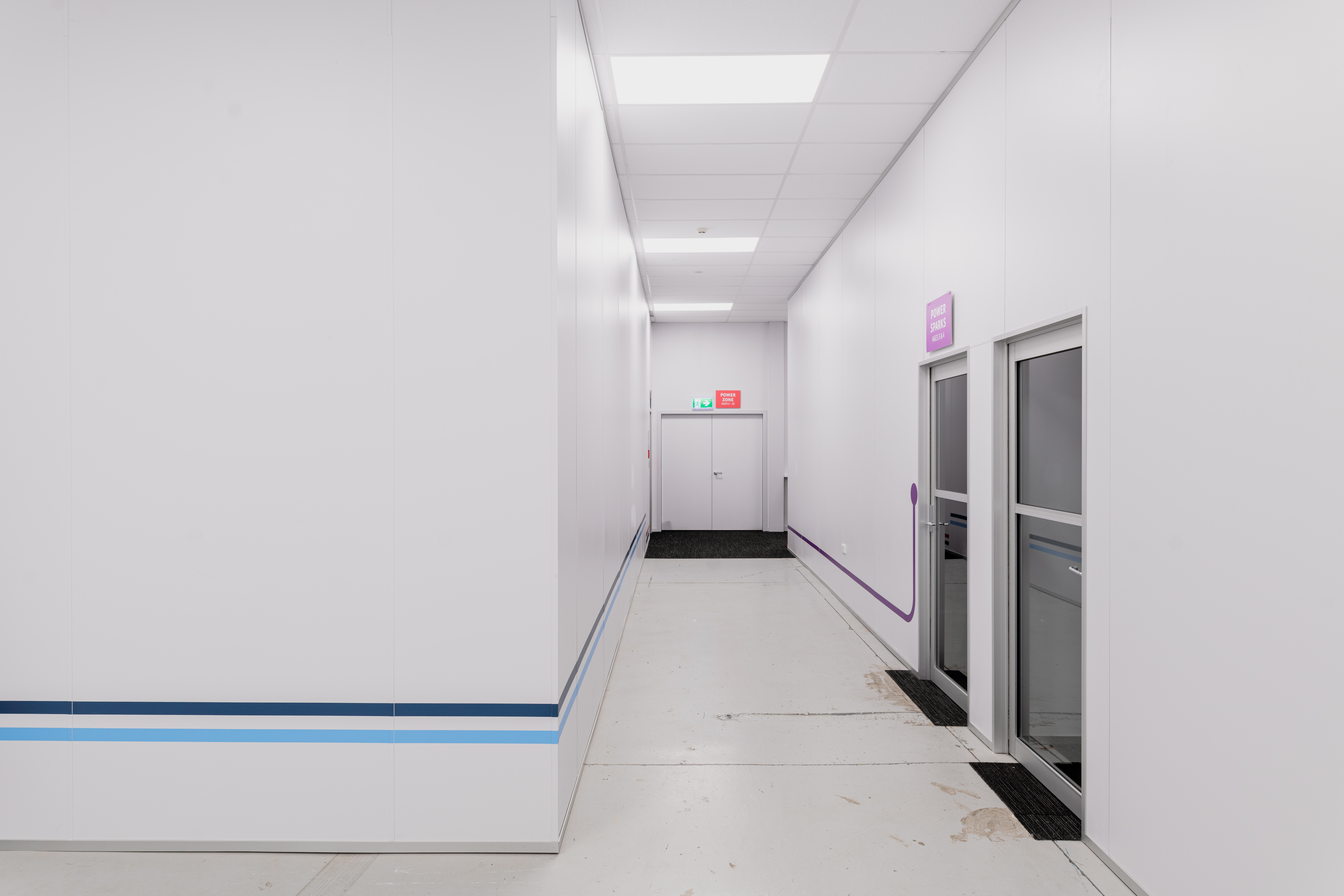

3.6m boards in custom colour

Matt Black
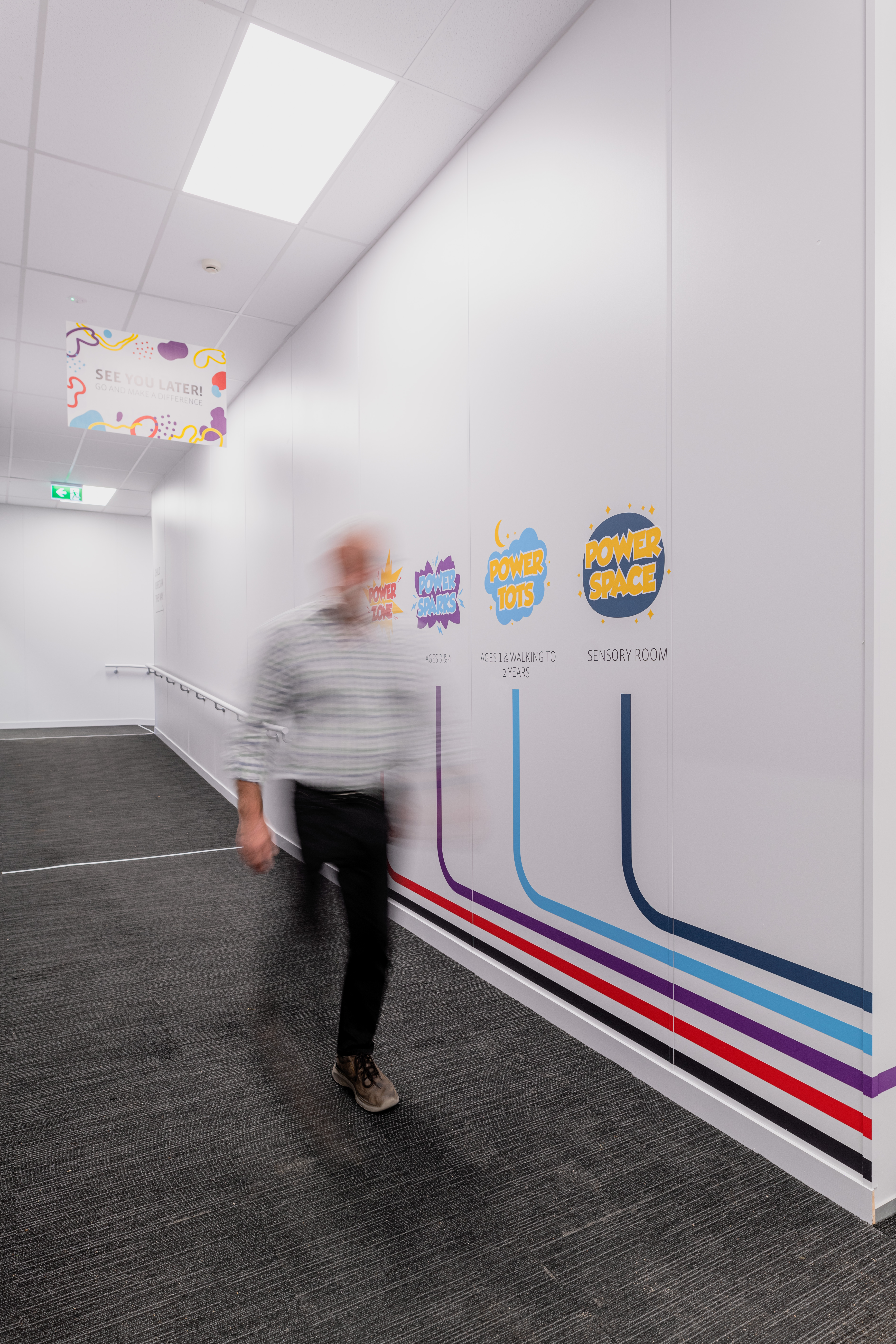

Anodized aluminium skirting